
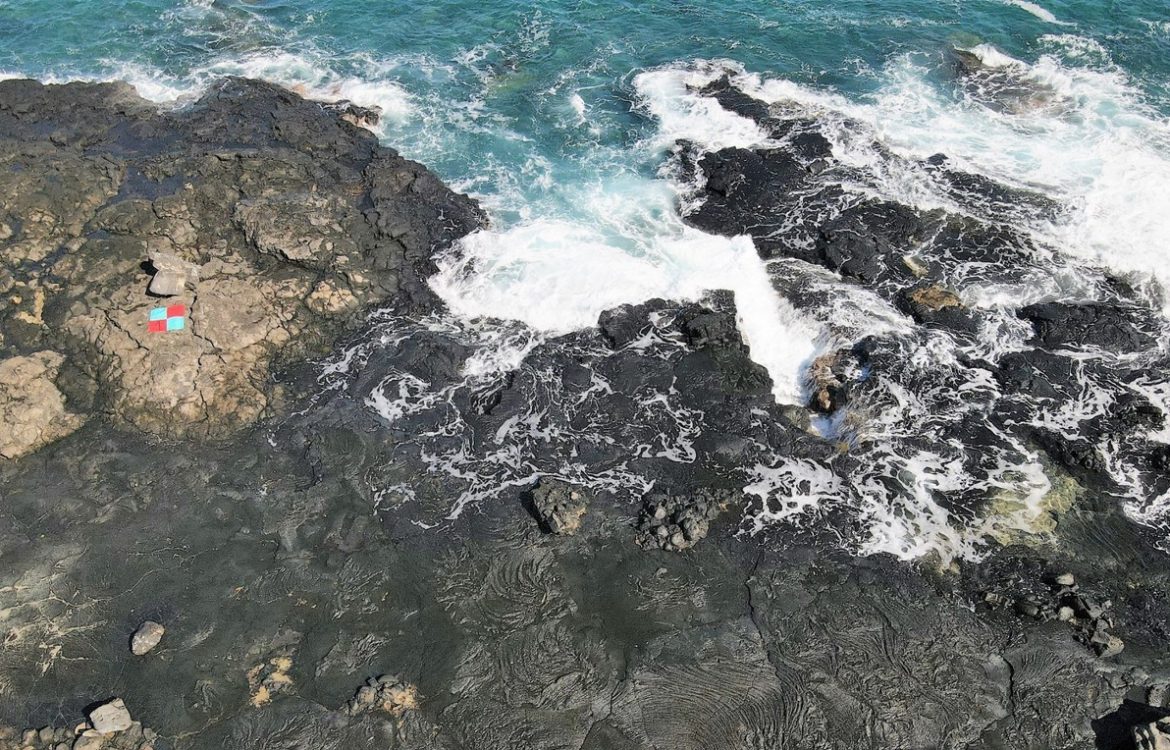
UH Hilo to lead $1.2M NASA grant to advance coastal resilience and student workforce development across Hawaiʻi
The project, led by marine scientists John Burns (UH Hilo) with co-principal investigator Haunani Kane (UH Mānoa), will expand hands-on research and workforce development opportunities for students across the 10-campus UH System.
By Susan Enright/UH Hilo Stories.
The University of Hawaiʻi at Hilo has been awarded a new three-year, $1.2 million NASA-funded research grant to advance understanding of coastal resilience in Hawaiʻi while expanding hands-on research and workforce development opportunities for students across the 10-campus UH System.


“We are very excited to connect students from across the UH system through applied research experiences that help build educational pathways into careers in science and conservation,” says John Burns, UH Hilo associate professor of marine science and chair of the department who will lead the project as co-principal investigator with Haunani Kane, assistant professor of earth sciences at UH Mānoa School of Ocean and Earth Science and Technology.
Both marine scientists have extensive research experience in climate impacts on reef and coastal areas. Burns’s research is based at his Multiscale Environmental Graphical Analysis Laboratory, commonly called MEGA Lab, at UH Hilo. He has developed innovative techniques to create three-dimensional maps of coral reefs to accurately measure how natural and human-induced disturbances impact ecosystem function.
- UH Hilo marine scientist John Burns receives tenure (Oct. 7, 2022, UH Hilo Stories)
- UH Hilo marine scientist John H. R. Burns honored for excellence in undergraduate education (May 20, 2020, UH Hilo Stories)
- Climate change research funded by NASA; UH Hilo students to investigate coastal erosion (Oct. 6, 2021, UH Hilo Stories)

A defining aspect of the new grant-funded project is its systemwide student engagement model
For the new grant project, the Burns-Kane team will integrate Earth observation science, in-water monitoring, and community-based knowledge to examine how sea level rise and climate-driven change are affecting coral reef ecosystems and nearshore coastal environments throughout Hawaiʻi.
“A defining aspect of the project is its systemwide student engagement model,” says Burns. “Students from UH Hilo, UH Mānoa, UH West Oʻahu, Hawaiʻi Community College, and Kapiʻolani Community College will participate directly in the research.”
Through this effort, students will receive hands-on training in satellite remote sensing, drone-based coastal mapping, three-dimensional reef modeling, and data analysis, while working alongside faculty mentors, community partners, and NASA collaborators.

Focus on coral reef and coastal systems that play a critical role in protecting shorelines by reducing wave energy, flooding, and erosion
The research focuses on coral reef and coastal systems that play a critical role in protecting shorelines by reducing wave energy, flooding, and erosion. By combining advanced technologies with place-based and cultural perspectives, the project will generate actionable data to support coastal planning, resource management, and long-term resilience strategies for Hawaiʻi communities.
Beyond its scientific outcomes, the project emphasizes workforce development and educational pathways that strengthen participation in STEM fields across the state. By engaging students from multiple campuses and academic levels, the initiative helps build a diverse and locally trained workforce equipped to address Hawaiʻi’s most pressing climate and environmental challenges.
“I believe this is a special project because it brings students from multiple campuses and programs together to work toward a shared goal of supporting long term coastal resilience strategies,” says Burns.
Story by Susan Enright, public information specialist for the Office of the Chancellor and editor of UH Hilo Stories. She received her bachelor of arts in English and certificate in women’s studies from UH Hilo.